
SAP: Agentic Workflow for GTMs
Context —
Desktop
With —
1 Business Architect, 1 Data Architect, 10+ Developers, 1PM
ROLE –
UX Design Intern (Solo)
Duration —
Sep 2025 – NOW
TL;DR: Overview
As the solo UX designer at SAP Digital Launchpad, an agentic platform serving Go-to-market sales users, I designed and shipped 6+ high-impact projects across multiple AI workflow features. I owned end-to-end and design-to-development cycles.
Adding Reliability into Automated RFP Responses
RFP (request for proposals) Workflow Automation
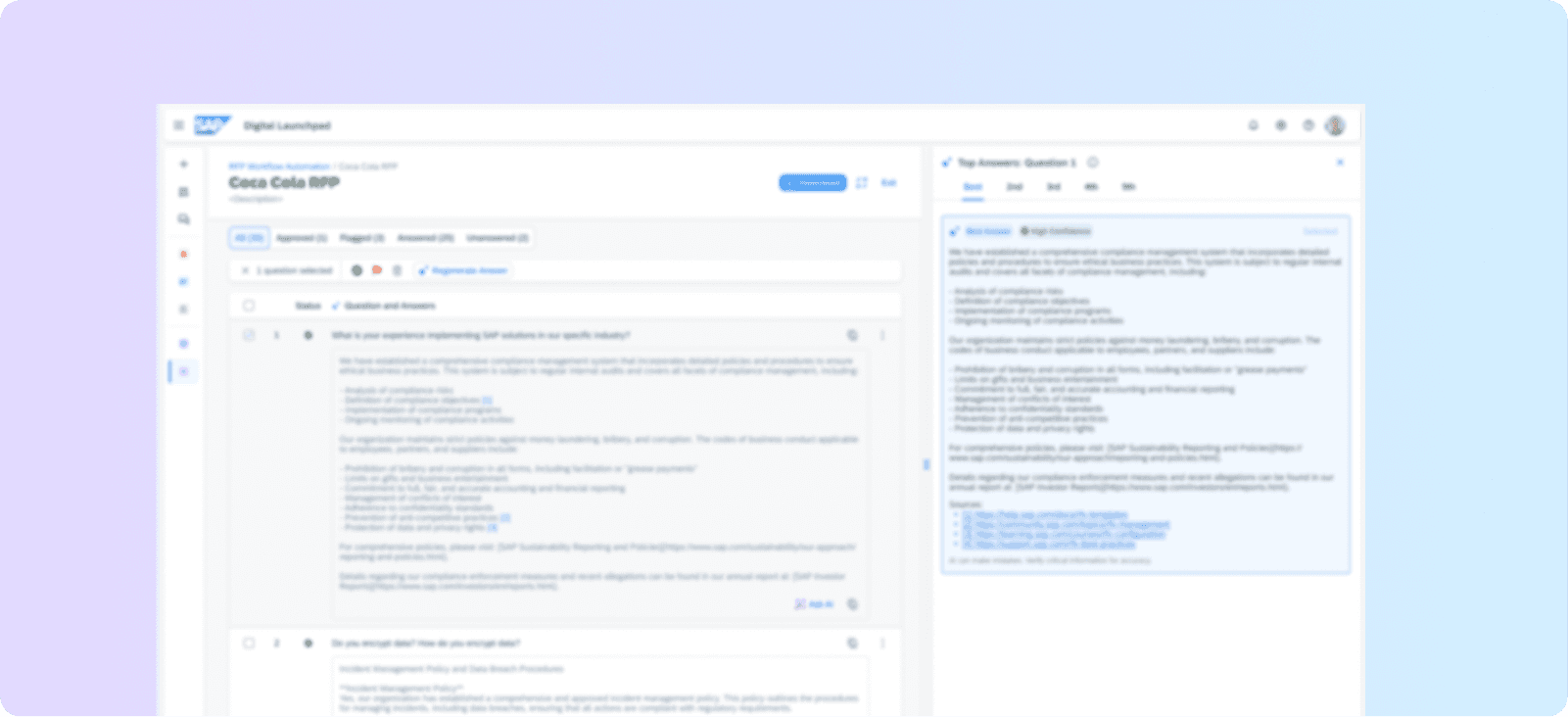
The current RFP (Request for Proposals) workflow was flooded with user complaints—sales teams had low trust in AI-generated answers for detailed vendor questionnaires with hundreds of questions requiring research and sourcing.
I researched, redesigned, and shipped the workflow to increase transparency and reduce errors by adding confidence scores for answer reliability, source citations to build trust, and anti-hallucination controls to prevent AI errors.
Designing Accountability into Mission-Critical Data Workflows
Role Specialization Agent
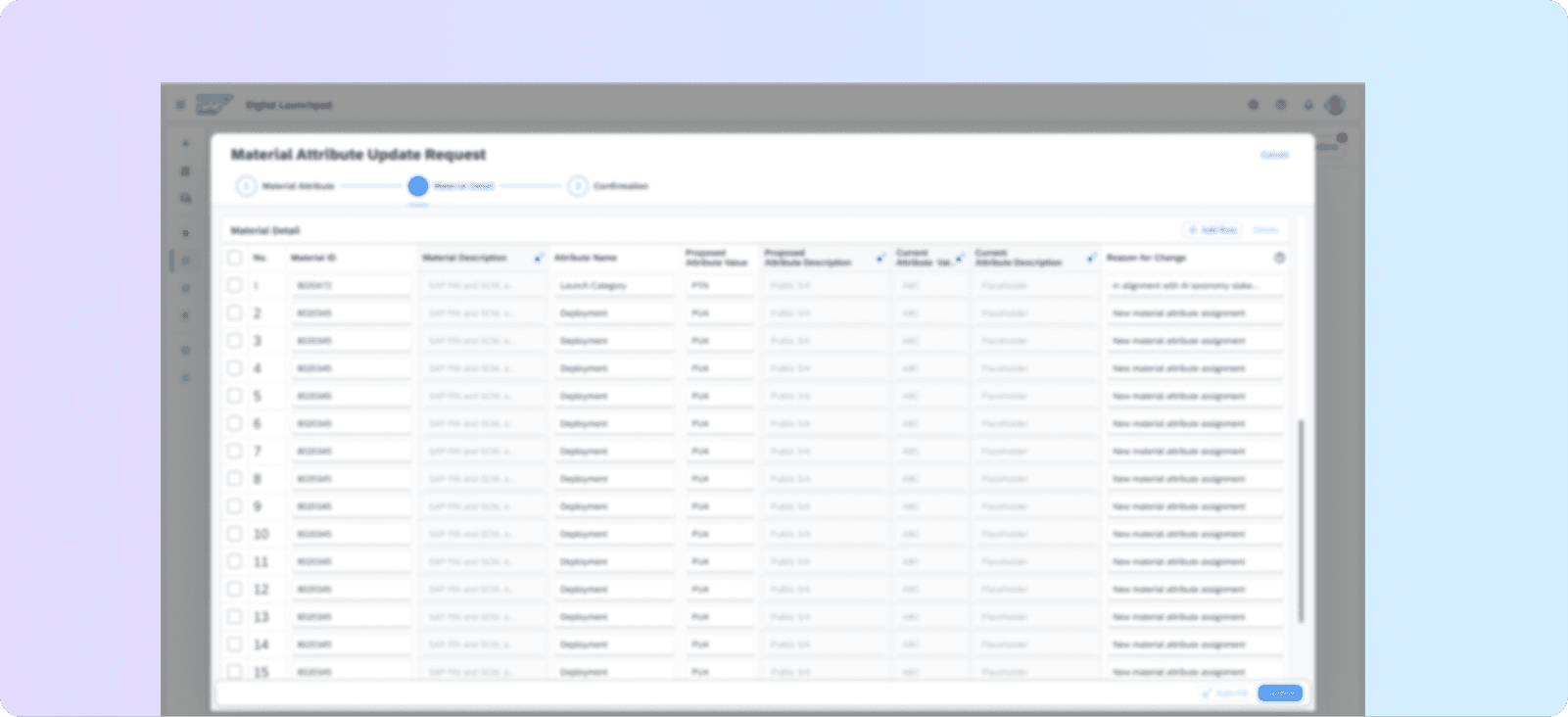
SAP managed thousands of sales roles and product attribute records in multiple Excel files with approval layers.
I redesigned these large-scale data workflows with built-in governance: query-based searches, structured approval workflows with line-item review, and 90-day reversibility windows for auditability.
This project is shipped and is currently in beta testing.
Designing End-to-End Content Automation: From Curation to generation
Content Engine: Curation & Generation
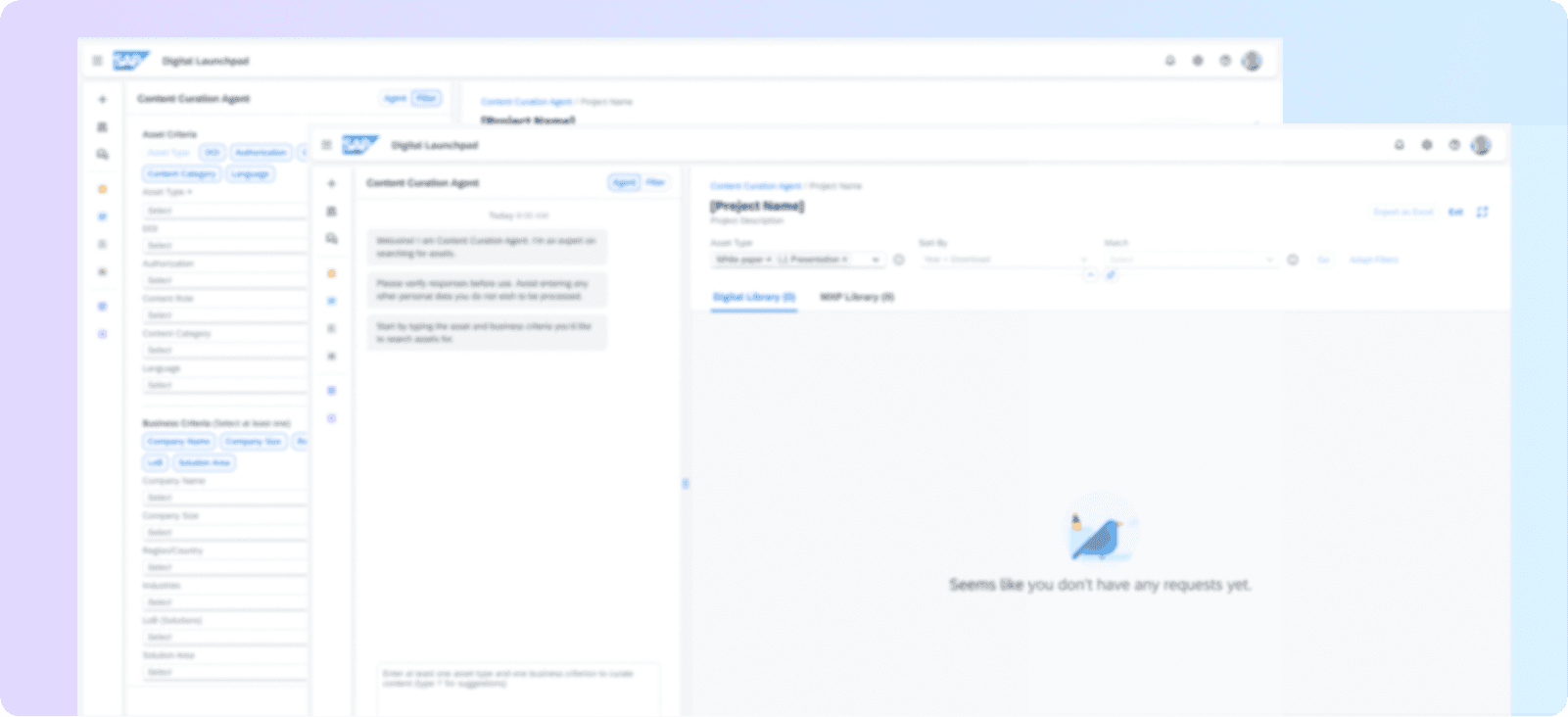
Sales teams were drowning in manual content creation. People spend days assembling PowerPoint decks from scattered data sources, sending static PDFs to prospects, and hunting through SharePoint for relevant materials.
Under the business requirement, I am designing a workflow that orchestrates three interconnected layers: content curation (AI agent surfaces contextually relevant assets based on sales criteria), third-party tool integration (data from customer databases and internal systems), and intelligent output (one-click generation across 3 categories: account plan decks, microsites, and pitch decks).
Phase I (account plan generation) is shipped and live.
THOUGHTS
Designing for Control, Non-static screens, and Who "decides" in AI Product Design
Designing AI products at SAP shaped my understanding that AI product design is fundamentally about defining who decides, and the most critical work happens before users ever see an interface. In pre-AI enterprise design, design frames are static with path A to B, or else if C, and iteration comes after building features. But that is upending in AI-design workflows.
I learned to design from the control layer:
Control: Where does automation stop?
Quality: What must the model reliably deliver?
Accountability: Who owns it when it fails?
Happy to chat about the full case study – reach out to me at [yzhang4176@gatech.edu].